Selecting the best GPU cloud providers for AI in 2026 has become the central architectural and financial decision for artificial intelligence teams, engineering leaders, and machine learning researchers. As generative models scale past hundreds of billions of parameters and enterprise inference demands millisecond response times, the underlying infrastructure makes or breaks release roadmaps. With hardware shortages evolving into multi-tier cloud offerings, finding the right GPU cloud providers 2026 balance requires evaluating raw compute capabilities, interconnect bandwidth, real-world pricing dynamics, bare-metal availability, and developer tooling.
In this technical benchmark report and market audit, we examine the premier AI infrastructure providers and conduct an exhaustive cloud GPU comparison for AI workloads. Whether your priority is finding on-demand GPU cloud servers for deep learning, identifying the cheapest GPU cloud providers for machine learning spot experiments, or provisioning dedicated multi-node superclusters for foundation model development, this empirical analysis arms you with the verified operational data required to optimize your compute stack.
2026 GPU Cloud Market: Key Takeaways for Technical Leads
- Top Overall Provider: Lambda Labs stands as the top all-around pick among GPU cloud providers for AI researchers and production teams, offering accessible on-demand NVIDIA H100 and H200 instances with zero egress markups and the battle-tested Lambda Stack.
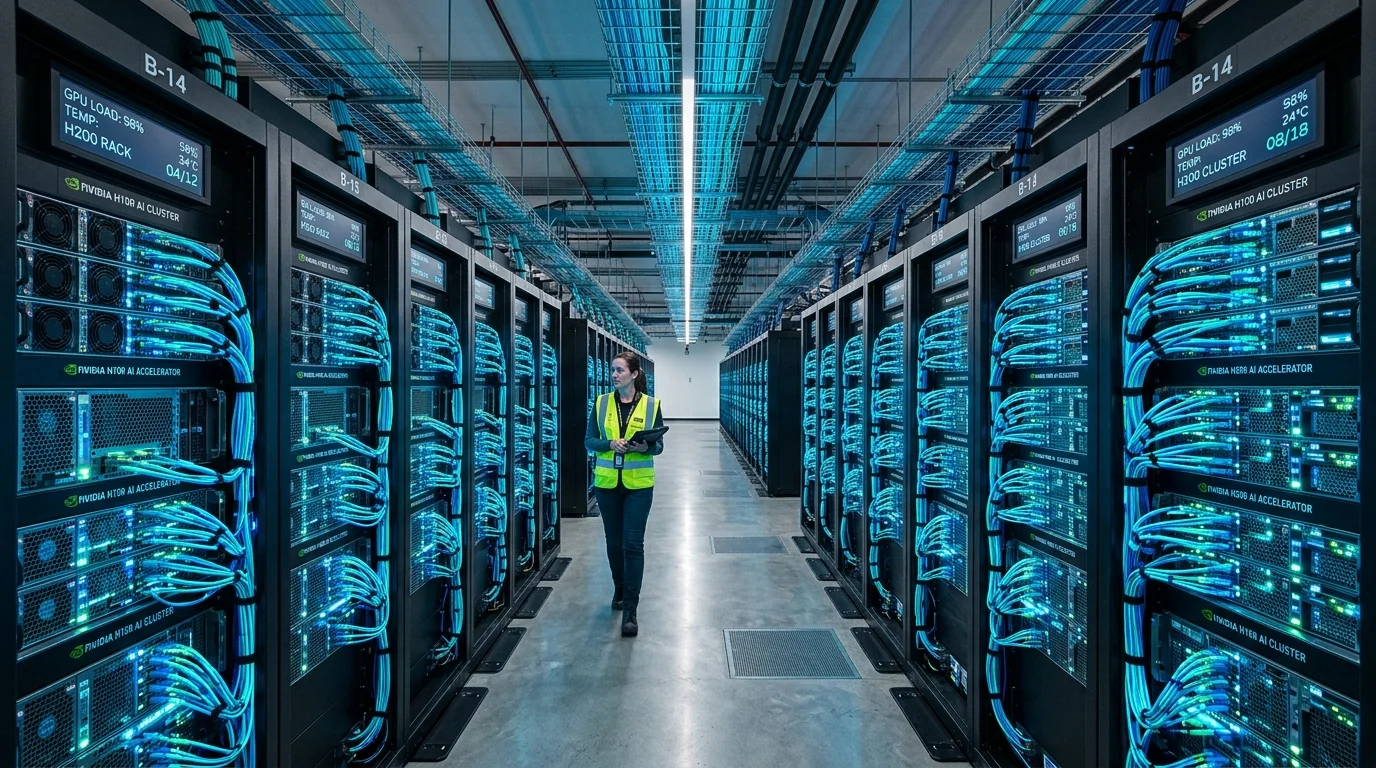
- Premier Training Infrastructure: CoreWeave remains the best GPU cloud provider for AI model training at supercomputer scale, utilizing bare-metal architecture connected by native NVIDIA Quantum-2 InfiniBand (3.2 Tbps per node).
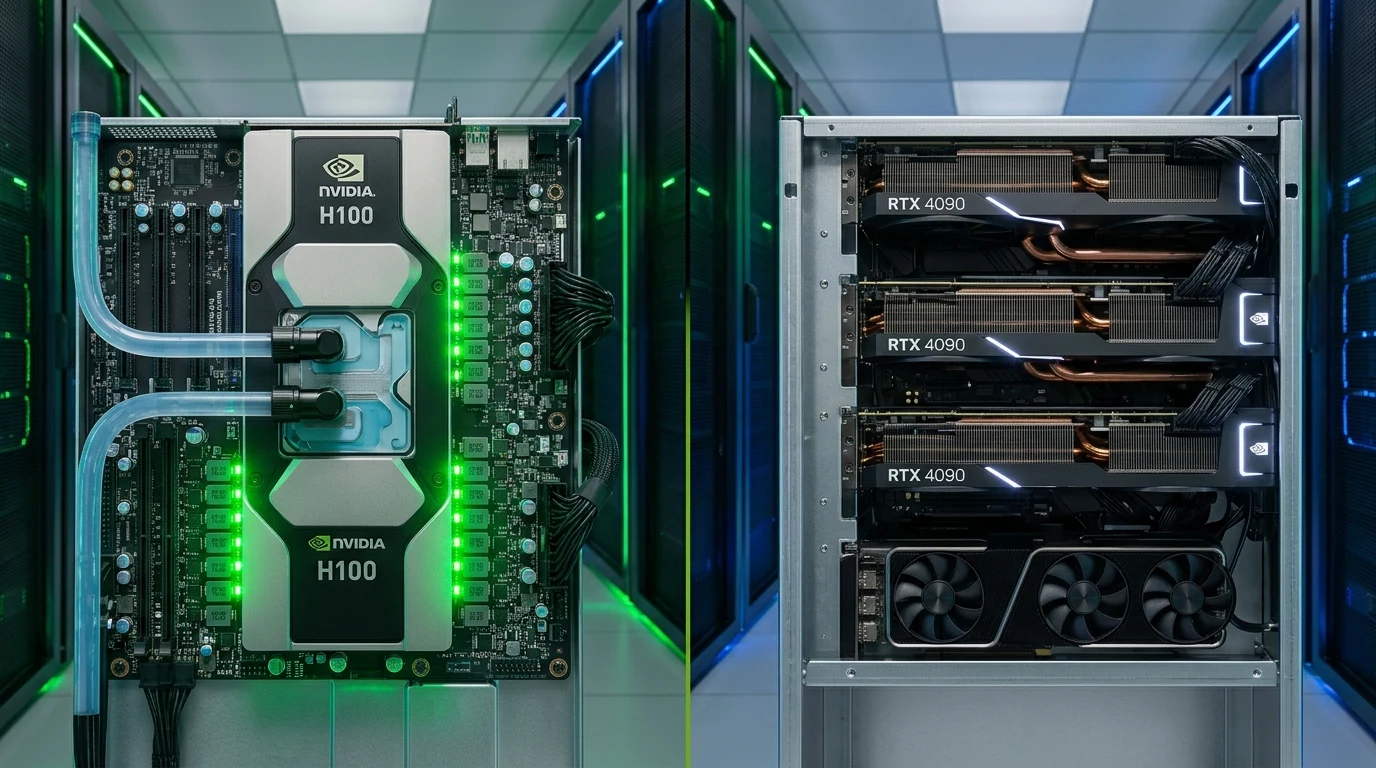
- Budget & Spot Optimization: Vast.ai and RunPod deliver the most affordable GPU cloud services, providing access to consumer Ada Lovelace (RTX 4090) and datacenter GPUs at discounts up to 70% below legacy hyperscalers.
- Generative AI & Inference Champion: The transition toward the NVIDIA H200 cloud GPU providers tier offers 141GB of HBM3e memory and 4.8 TB/s bandwidth, making it the undisputed best cloud GPU for LLM training and inference workloads.
What Is a GPU Cloud Provider?
A GPU cloud provider is a specialized infrastructure-as-a-service (IaaS) company that rents on-demand or reserved access to high-performance graphics processing units (GPUs) engineered specifically for accelerated mathematical computing. While traditional cloud hosting relies on central processing units (CPUs) that execute code sequentially across a limited number of cores, AI GPU cloud hosting deploys server instances packed with thousands of parallel arithmetic processing cores and specialized tensor acceleration hardware.
Modern GPU cloud computing platforms are designed from the silicon up to handle the massive matrix multiplication and tensor reduction routines that power modern neural networks. When procuring a cloud GPU for machine learning, engineering teams typically navigate three distinct market segments:
- Specialized AI Neoclouds: Companies such as Lambda Labs, CoreWeave, Hyperstack, and DataCrunch. These providers bypass legacy virtualization overhead by building bare-metal datacenters equipped with high-density liquid cooling, 400GbE or InfiniBand fabrics, and immediate container provisioning.
- Distributed Compute Marketplaces: Platforms such as Vast.ai and RunPod Community Cloud. These marketplaces aggregate vetted datacenter capacity globally, unlocking exceptionally affordable cloud GPUs for startups, indie researchers, and batch offline rendering.
- Legacy Enterprise Hyperscalers: Tier-1 cloud conglomerates such as Amazon Web Services (AWS EC2), Microsoft Azure, Google Cloud Platform (GCP), and Oracle Cloud Infrastructure (OCI). While they provide comprehensive compliance certifications and corporate identity management, their hourly compute rates and stringent GPU quota approvals often pose significant hurdles for fast-moving engineering teams.
Operating a dedicated GPU cloud for deep learning encompasses far more than raw hardware rental. A high-caliber provider supplies pre-configured software environments—including NVIDIA CUDA runtimes, cuDNN, PyTorch, TensorFlow, and Triton Inference Server—alongside distributed high-IOPS storage and dedicated container orchestration engines like Kubernetes and Slurm.
Best GPU Cloud Providers for AI in 2026
Determining the best cloud GPU for AI requires balancing accelerator performance, network fabric throughput, service level agreements (SLAs), platform software ergonomics, and pricing fairness. Below are our thoroughly audited evaluations of the industry's leading best GPU cloud providers across dedicated operational categories.
Best Overall GPU Cloud Provider
Lambda Labs secures our ranking as the best overall provider of GPU servers for AI. Established by deep learning practitioners for the research and engineering community, Lambda removes the operational friction typical of legacy hosting providers. New instances boot in under 30 seconds with the proprietary Lambda Stack pre-installed, ensuring seamless synchronization between NVIDIA drivers, CUDA 12.x, and the best GPU instances for PyTorch and TensorFlow.
Lambda operates a robust dual-tier delivery model: on-demand instances (Lambda Cloud) and multi-node dedicated supercomputing clusters (Lambda 1-Click Clusters). Their hardware fleet is centered around top-tier NVIDIA GPU cloud hardware, featuring the NVIDIA H100 SXM5 80GB, the high-memory H200 NVL/SXM 141GB, and the reliable NVIDIA A100 80GB Tensor Core. On-demand pricing for an H100 SXM5 is transparently pegged at $2.49 per GPU-hour, with absolutely zero hidden egress fees on standard bandwidth.
For organizations requiring guaranteed multi-month capacity, Lambda's reserved marketplace offers aggressive discounts for 1-year and 3-year commitments. Backed by high-speed InfiniBand clustering and responsive technical support from genuine AI practitioners, Lambda Labs delivers the most balanced developer experience in the modern market.
Best Budget GPU Cloud
For developers and organizations seeking the cheapest GPU cloud providers for machine learning, Vast.ai and RunPod stand out as market leaders in cost efficiency. These platforms demonstrate that high-performance artificial intelligence computing does not require enterprise-tier budgets.
Vast.ai operates an open marketplace pairing hardware hosts with compute consumers. Through its advanced dynamic bidding and auction system, developers can secure consumer-flagship NVIDIA GeForce RTX 4090 (24GB VRAM) instances for as little as $0.29 to $0.45 per hour. For teams working on medium-scale tasks—such as fine-tuning 8B parameter models, running Stable Diffusion XL or Flux pipelines, or training computer vision backbones—Vast.ai provides unmatched price-per-FLOP economics.
RunPod strikes an ideal balance between budget affordability and enterprise reliability. In addition to low-cost community instances, RunPod provides Secure Cloud instances housed in verified Tier-3/4 datacenters, network storage volumes, and high-performance serverless endpoints with sub-second cold starts. Their sleek Web UI and intuitive Docker templates make RunPod the premier launchpad for bootstrapping developers and budget-conscious engineering labs.
Best GPU Cloud for LLM Training
Training large language models with tens or hundreds of billions of parameters requires infrastructure that functions as a single, low-latency computational engine. In this demanding category, CoreWeave is widely recognized as the best GPU cloud provider for AI model training.
CoreWeave's architectural superiority stems from its pure bare-metal design. Rather than routing traffic through virtualized hypervisor layers that degrade network performance, CoreWeave connects every GPU node directly to an NVIDIA Quantum-2 InfiniBand fabric delivering 3.2 Tbps of non-blocking, bidirectional bandwidth per node. This eliminates packet jitter and tail latency during distributed AllReduce collective operations in PyTorch FSDP and Megatron-LM training runs.
Operating tens of thousands of NVIDIA H100, H200, and Blackwell B200 accelerators orchestrated via native Kubernetes, CoreWeave provides direct integration with high-throughput parallel file systems like WekaFS. Engineering teams benefit from automated hardware health monitoring, immediate node self-healing, and white-glove engineering onboarding that guarantees continuous cluster uptime during multi-week training marathons.
Best Enterprise GPU Infrastructure
When enterprise regulatory compliance, sovereign data boundaries, and integration into existing enterprise IT environments take precedence, legacy hyperscalers deliver robust institutional capabilities:
- Microsoft Azure: Backed by its high-profile partnership with OpenAI, Azure's NDv5 and ND H100 v5 instances deliver massive computational scale wired with NVIDIA Quantum-2 InfiniBand fabrics, supported by comprehensive SOC 1/2/3, ISO 27001, and HIPAA compliance frameworks.
- Amazon Web Services (AWS): The EC2 P5 instance family (powered by 8x NVIDIA H100 SXM5 accelerators) is interlinked via second-generation Elastic Fabric Adapter (EFA v2) networking offering 3,200 Gbps bandwidth. AWS integrates seamlessly with Amazon SageMaker, managed S3 storage lakes, and robust IAM governance.
- Oracle Cloud Infrastructure (OCI): OCI has established a strong enterprise reputation by hosting frontier clusters for major AI organizations such as Cohere and xAI. OCI offers bare-metal H100 and H200 instances linked via RoCE v2 networking at flat, predictable rates with attractive long-term volume commitments.
Best GPU Cloud for AI Startups
High-growth AI startups operate under tight time constraints and cannot afford to wait weeks for quota approvals or commit to multi-year contracts. To conserve seed capital and maximize velocity, startups thrive on flexible, developer-friendly platforms:
- Hyperstack: Operating out of premier European datacenters, Hyperstack delivers on-demand H100, L40S, and A100 instances with minute-by-minute billing, 60-second VM provisioning, and transparent hourly rates up to 40% cheaper than traditional hyperscalers.
- Together AI: Provides a specialized hybrid environment combining dedicated training clusters with a high-performance serverless inference API. Startups can train models on bare-metal nodes and deploy them instantly to an autoscale inference endpoint with minimal engineering overhead.
- DataCrunch: Based in Finland and Iceland, DataCrunch leverages 100% renewable energy to provide cost-effective bare-metal GPU compute, high-speed NVMe storage, and full GDPR compliance for European startups.
GPU Cloud Pricing Comparison
Navigating modern cloud GPU pricing comparison schedules requires understanding the distinct billing constructs across vendors. Standard industry procurement in 2026 falls into three core models:
- On-Demand: Billed strictly by the second, minute, or hour with zero commitments. Instances can be spun up or terminated at will, providing maximum agility at standard list rates.
- Reserved (1-Year / 3-Year): Contracted capacity with guaranteed availability. Providers grant significant discounts ranging from 25% to 55% in exchange for predictable, committed spending.
- Spot / Preemptible: Heavily discounted surplus capacity (up to 75% off standard rates). In exchange for lower pricing, instances can be interrupted and reclaimed by the cloud provider when demand surges, making them ideal for fault-tolerant batch processing.
The table below provides a detailed side-by-side benchmark of NVIDIA H100 cloud rental pricing, A100 rates, consumer GPU pricing, and associated networking structures across top hosting providers:
| Cloud Provider | GPU Model & VRAM | On-Demand ($/hr) | 1-Yr Reserved ($/hr) | Spot / Interruptible | Interconnect Architecture | Data Egress Cost |
|---|---|---|---|---|---|---|
| Lambda Labs | NVIDIA H100 SXM5 80GB | $2.49 | $1.89 | Limited Availability | Quantum-2 InfiniBand (3.2 Tbps) | Free |
| Lambda Labs | NVIDIA A100 SXM4 80GB | $1.29 | $0.95 | Limited | NVLink 3 / InfiniBand | Free |
| CoreWeave | NVIDIA H100 SXM5 80GB | $2.65 | $1.99 | Bare-Metal Reserved | Quantum-2 InfiniBand (3.2 Tbps) | Free / Negligible |
| CoreWeave | NVIDIA H200 SXM 141GB | $3.45 | $2.65 | Reserved Fleet | Quantum-2 InfiniBand (3.2 Tbps) | Free / Negligible |
| RunPod (Secure) | NVIDIA H100 SXM5 80GB | $2.69 | $1.99 | $1.89 | RoCE v2 400GbE | $0.01 / GB |
| RunPod (Community) | RTX 4090 24GB | $0.44 | N/A | $0.29 | PCIe 4.0 / Ethernet | $0.01 / GB |
| Vast.ai | RTX 4090 24GB | $0.34 | N/A | $0.22 | PCIe 4.0 / Local | ~$0.01 / GB |
| Vast.ai | NVIDIA A100 PCIe 80GB | $1.15 | N/A | $0.79 | PCIe / 10-40GbE | Varies by Host |
| Hyperstack | NVIDIA H100 NVL 94GB | $2.50 | $1.85 | $1.60 | NVLink Bridge | Free tier + nominal |
| AWS (EC2 P5.48xlarge) | 8x H100 SXM5 80GB | $98.32 ($12.29/GPU) | $4.85 / GPU equiv. | Dynamic Spot | EFA v2 (3,200 Gbps) | $0.09 / GB |
| Google Cloud (A3 High) | 8x H100 SXM5 80GB | $88.40 ($11.05/GPU) | $4.40 / GPU equiv. | Preemptible Spot | Titanium GPUDirect | $0.08–$0.12 / GB |
*Verified 2026 pricing benchmarks. Surcharges for high-performance NVMe storage ($0.08 to $0.20 per GB-month) apply depending on provider tier. Explore real-time rates on our interactive GPU cloud rankings directory.
When calculating true total cost of ownership (TCO), remember that compute rates are only part of the equation. Egress data transfer fees on legacy hyperscalers can be financially punishing. Moving a 40TB training dataset or streaming tens of thousands of model checkpoint checkpoints from AWS S3 or GCP buckets can generate thousands of dollars in surprise monthly fees. In contrast, specialized AI clouds like Lambda and CoreWeave offer unmetered or virtually free data transfers, drastically lowering overall expenses.
NVIDIA H100 vs. H200 vs. A100 vs. B200
Choosing the appropriate silicon architecture is vital to unlocking optimal performance. Matching your computational workload to the right accelerator prevents costly out-of-memory (OOM) errors during training while avoiding over-provisioning during inference.
| Specification Metric | NVIDIA A100 SXM4 | NVIDIA H100 SXM5 | NVIDIA H200 SXM | NVIDIA B200 (Blackwell) |
|---|---|---|---|---|
| Architecture | Ampere (7nm TSMC) | Hopper (4N TSMC) | Hopper Enhanced (4N) | Blackwell (4NP TSMC) |
| VRAM Memory Capacity | 80 GB HBM2e | 80 GB HBM3 | 141 GB HBM3e | 192 GB HBM3e |
| Memory Bandwidth | 2.0 TB/s | 3.35 TB/s | 4.8 TB/s | 8.0 TB/s |
| Tensor FP16/BF16 | 312 TFLOPS | 989 TFLOPS | 989 TFLOPS | 2,250 TFLOPS |
| Tensor FP8 Throughput | Not Supported (Native) | 1,979 TFLOPS | 1,979 TFLOPS | 4,500 TFLOPS |
| Tensor FP4 Precision | Not Supported | Not Supported | Not Supported | 9,000 TFLOPS |
| NVLink Bandwidth | 600 GB/s (NVLink 3) | 900 GB/s (NVLink 4) | 900 GB/s (NVLink 4) | 1,800 GB/s (NVLink 5) |
| Primary Workload Fit | Standard fine-tuning, CV, speech models | Pre-training <70B, FP8 fine-tuning | Frontier LLM inference (70B–405B), RAG | Frontier pre-training, massive FP4 inference |
NVIDIA A100 (80GB): Cost-Efficient Foundation Workhorse
Organizations that choose to rent A100 GPU in the cloud benefit from rock-solid CUDA stability and wide runtime compatibility. While it lacks native FP8 precision, the A100 remains an exceptional choice for computer vision, audio processing (Whisper Large), embedding generation, and classic deep learning pipelines where 2.0 TB/s memory bandwidth is more than sufficient.
NVIDIA H100 (80GB): The Standard for Distributed Training
The Hopper GH100 silicon established the contemporary standard for artificial intelligence clusters. Featuring 4th-generation Tensor Cores and a specialized Transformer Engine, the H100 triples the training throughput of Ampere cards when executing FP8 matrix operations. For distributed data parallel pre-training and parameter-efficient fine-tuning (LoRA), the H100 remains the industry benchmark.
NVIDIA H200 (141GB): High-Throughput Generative AI Champion
The breakthrough of the H200 lies in its massive 141GB HBM3e memory pool and remarkable 4.8 TB/s memory bandwidth, establishing it as the best GPU cloud for generative AI workloads. Because autoregressive large language model inference is memory-bandwidth bound during token generation, the H200 delivers up to 2x faster inference token output compared to the H100. Furthermore, an 8-GPU H200 node provides over 1.1 Terabytes of unified VRAM, allowing engineering teams to serve Llama 3.1 70B and 405B models with expansive context windows on fewer nodes without tensor-parallel network bottlenecks.
NVIDIA B200 (Blackwell): Frontier Supercomputing
The flagship of NVIDIA's Blackwell generation, the B200 integrates dual reticle dies connected by a 10 TB/s NVLink-C2C interconnect. Delivering 192GB of HBM3e memory at 8.0 TB/s and introducing native FP4 precision Tensor Cores, B200 clusters accelerate frontier foundation model pre-training by up to 4x while expanding inference serving efficiency by an order of magnitude.
How to Choose the Best GPU Cloud for AI
Selecting the optimal cloud platform for your AI roadmap requires evaluating five core engineering criteria:
1. Price-to-Performance & Memory Sizing
Always size your hardware based on model parameter count and activation footprints:
- Models Under 8 Billion Parameters: A single 24GB card (RTX 4090 or L4) provides ample capacity for inference and quantized fine-tuning at negligible hourly costs.
- Models Between 13B and 34B Parameters: Requires an 80GB A100 or H100 for unquantized inference, or dual 48GB enterprise cards (L40S).
- Models at 70B+ Parameters: Demands an 8x H100 (640GB aggregate VRAM) or an 8x H200 (1,128GB aggregate VRAM) node to maintain high request concurrency and 128k context lengths.
2. Cluster Interconnect (InfiniBand vs. RoCE v2)
When distributing workloads across multiple physical machines, network interconnect latency determines overall cluster utilization. While standard 10GbE or 25GbE Ethernet is adequate for single-node workloads, distributed training requires non-blocking NVIDIA Quantum-2 InfiniBand (3.2 Tbps per node) or RoCE v2 400GbE with RDMA. Without high-speed RDMA fabrics, GPU cores stall during AllReduce synchronization, cutting cluster efficiency by up to 60%.
3. High-Throughput NVMe Storage
Accelerators cannot compute if data loaders are starved. Ensure your cloud provider provisions local PCIe Gen5 NVMe storage capable of 6,000+ MB/s read speeds, alongside distributed parallel file systems (such as WekaFS or Lustre) for streaming terabyte-scale training datasets without I/O blocking.
4. Software Stack & Container Orchestration
Prioritize cloud providers that offer certified base images containing CUDA 12+, PyTorch 2.x, Triton Inference Server, and FlashAttention-2. Look for native support for Slurm job schedulers, Kubernetes GPU operators, and automated node health monitoring.
5. Geographic Availability & Compliance
Ensure your chosen provider maintains datacenters in jurisdictions compatible with your data privacy obligations (such as GDPR in Europe or SOC2/HIPAA in North America). European neoclouds like Hyperstack and DataCrunch offer dedicated EU data sovereignty, whereas CoreWeave and AWS cater extensively to North American corporate governance.
GPU Cloud vs. Traditional Cloud vs. Local GPUs
Infrastructure architects frequently debate whether to procure on-premise hardware, utilize legacy enterprise clouds, or partner with specialized AI neoclouds. The comparison matrix below details the trade-offs:
| Operational Metric | Specialized AI GPU Cloud | Legacy Hyperscaler (AWS / GCP) | Local On-Premises Rig / Cluster |
|---|---|---|---|
| Upfront Capital Expenditure (CapEx) | $0 (Pure operating expense) | $0 (Pure operating expense) | Extremely High ($50k–$400k+ per rack) |
| Hourly Compute Cost | Cost-Effective ($2.20–$2.70 / H100) | High ($5.00–$12.00 / H100 equiv.) | Electricity & cooling costs only |
| Deployment Speed | Instant (Seconds to minutes) | Minutes (Subject to strict quotas) | Weeks to months (Procurement cycles) |
| Hardware Obsolescence | Zero (Providers upgrade regularly) | Zero (Switch instances on demand) | High (Depreciates in 24–36 months) |
| Networking Interconnect | Bare-Metal InfiniBand / RoCE | Virtualized Network Overlays | Local NVLink / Top-of-Rack Switch |
| Facility Overhead | None (Fully managed datacenter) | None (Fully managed datacenter) | Heavy (30kW+ cooling, 3-phase power) |
| Scalability & Bursting | High (Instantly add/remove nodes) | Very High (Within quota ceilings) | Zero (Fixed physical capacity limit) |
For modern startups and engineering teams building generative models, specialized NVIDIA GPU cloud providers offer the winning formula: they eliminate the massive capital risk and datacenter cooling headaches of on-premises hardware while bypassing the steep 200% markups and quota restrictions of traditional clouds.
Frequently Asked Questions
What is the best GPU cloud provider for AI?
The best GPU cloud provider for AI in 2026 is Lambda Labs for all-around machine learning development, research experimentation, and competitive on-demand NVIDIA H100 and H200 pricing. For multi-node foundation model pre-training at enterprise scale, CoreWeave is the top choice due to its bare-metal InfiniBand architecture. For budget-sensitive workloads, Vast.ai and RunPod offer the most cost-effective community and serverless options.
What is the cheapest GPU cloud for machine learning?
The cheapest GPU cloud platforms for machine learning are Vast.ai and RunPod Community Cloud. Vast.ai enables developers to rent consumer-grade NVIDIA RTX 4090 GPUs starting at $0.29 to $0.44 per hour, and datacenter A100 80GB instances starting at $0.79 per hour on spot markets. These rates represent a 60% to 75% savings compared to standard hyperscaler compute instances.
How much does it cost to rent an NVIDIA H100?
Renting an on-demand NVIDIA H100 SXM5 80GB GPU on a specialized AI cloud typically costs between $2.20 and $2.70 per hour in 2026. Reserved 1-year commitments reduce this rate to between $1.65 and $1.99 per hour. By contrast, on legacy clouds such as AWS or Google Cloud, an H100-equivalent instance costs between $4.50 and $12.00 per hour when factoring in multi-GPU instance packaging and data egress fees.
Which GPU is best for training LLMs?
The NVIDIA H100 SXM5 and NVIDIA H200 are the premier choices for training large language models. The H100 delivers unmatched FP8 compute density through its Transformer Engine. For large foundation models (70B+ parameters) requiring massive context windows and higher throughput, the H200 with 141GB HBM3e memory delivers up to 2x higher inference throughput and eliminates distributed memory bottlenecks.
Can I run AI models on a cloud GPU?
Yes. Cloud GPU providers enable you to spin up instances running Linux environments pre-loaded with NVIDIA CUDA drivers, PyTorch, TensorFlow, and Docker. You can connect securely via SSH or browser-based JupyterLab notebooks, clone your model repositories from Hugging Face or GitHub, and execute inference or training jobs immediately. Serverless providers like RunPod and Together AI also allow you to deploy models directly behind REST APIs without managing virtual servers.
Is the NVIDIA H200 significantly better than the H100 for generative AI?
Yes. While both accelerators share the Hopper architecture and deliver identical raw FLOPS, the H200 expands VRAM from 80GB to 141GB and boosts memory bandwidth from 3.35 TB/s to 4.8 TB/s. Because autoregressive token generation in generative AI is memory-bandwidth bound, the H200 delivers up to 1.9x to 2.2x faster output token generation on 70B+ parameter models and handles massive context windows with ease.
How does InfiniBand impact multi-node distributed training?
NVIDIA Quantum-2 InfiniBand provides 3.2 Tbps bidirectional bandwidth per node with sub-microsecond latency, utilizing Remote Direct Memory Access (RDMA) to bypass host CPU and kernel overhead. This ensures that GPU-to-GPU collective communications during distributed training (such as AllReduce operations) execute at wire speed. On standard Ethernet networks lacking RDMA, network latency frequently stalls GPU processing, reducing cluster efficiency by 40% to 70%.
Final Verdict: Maximizing Your AI Compute Strategy
In 2026, raw computational horsepower is the fundamental driver of AI innovation. By selecting an infrastructure partner tailored to your exact lifecycle stage, you can maximize iteration speed while safeguarding critical runway:
- For rapid prototyping, exploratory research, and indie development, leverage RunPod or Vast.ai to maintain minimal burn rates.
- For production inference endpoints and stable model fine-tuning, deploy on Lambda Labs or Hyperstack.
- For multi-node foundation model pre-training across high-density clusters, partner with the bare-metal InfiniBand architecture of CoreWeave.
To inspect verified hardware benchmarks, provider uptime telemetry, and real-time pricing matrices, explore our comprehensive GPU cloud server rankings and use our interactive cloud comparison tool to engineer the ultimate infrastructure foundation for your machine learning workloads.